
At a Glance
Nordinsel: Städte, Māori-Kultur, Geothermie (Rotorua), warme Küsten, kürzere Fahrten; oft günstiger.
Südinsel: Fjorde, Gletscher, große Wildnis, weniger Menschen; längere Distanzen, wechselhaftes Wetter.
Beste Reisezeit: März–April oder Okt–Nov für gutes Wetter und weniger Andrang; Sommer ist am vollsten.
Praktisch: NZeTA + IVL nötig, Linksverkehr, Fahrzeiten großzügig planen; starke UV-Strahlung, Sandflies, strenge Biosecurity.
Milford Sound gets all the postcards. Rotorua gets the geothermal drama. But the real question for anyone planning a Neuseeland Rundreise isn’t which island has better scenery. Both do. The question is which island matches your pace, your interests, and the kind of honeymoon you actually want to have. These New Zealand travel tips are built specifically for German travelers weighing Nordinsel oder Südinsel, with practical distances, seasonal timing, and the details that matter when you’re 18,000 kilometers from home.
New Zealand is roughly the size of Italy, split into two main landmasses separated by the Cook Strait (a 3.5-hour ferry crossing or a 25-minute flight between Wellington and Picton). The North Island holds about 77% of the country’s population. The South Island holds most of the wilderness. That split shapes everything: where you eat, how you drive, and how many other people you’ll see doing the same thing.
What guests are saying
“They know what travel means! My wife was pregnant at our India trip and we told them and they made sure all arrangements were possible for her. We had a fantastic driver! Very sweet guy and helpful. Our guides also respected the pregnancy and were very accommodating. We will book again!”
— Ben Schwager · Google · ★ 5.0
“My wife and I booked a trip to India through BBT. We visited Jaipur and Delhi, among other places. Everything went wonderfully, and our requests were met to our complete satisfaction. We got to know the country and its people and received a warm welcome everywhere we went. I even dared to drive in Delhi’s city traffic—or rather, I got to drive Mr. Baloni’s car ;)”
— Jan Szameitat · Google · ★ 5.0
North Island: Geothermal Heat, Māori Culture, and Coastal Warmth
The North Island is where New Zealand’s cultural and urban energy concentrates. Auckland, the largest city (population roughly 1.7 million), sits on an isthmus between two harbors. It’s your likely arrival point from Frankfurt, with flights landing at Auckland Airport after approximately 24 hours of travel time including one connection.
From Auckland, the best places to visit in New Zealand’s north fan out in three directions. Head southeast to the Coromandel Peninsula (about 2.5 hours by car), where Cathedral Cove’s natural rock arch frames a white-sand beach you’ll probably recognize from photographs. Or drive south roughly 3 hours to Rotorua, where the ground literally steams. Te Puia, the Māori cultural center, sits above the Pōhutu Geyser, which erupts up to 30 meters high, sometimes 20 times a day.
The Bay of Islands, about 3.5 hours north of Auckland, is warmer, quieter, and feels like a different country entirely. There are 144 islands scattered across the bay. You can kayak between them, or charter a boat and anchor somewhere private for lunch.
Honestly, if I’m being picky, the North Island’s roads between major stops can feel long and uneventful in stretches. The Waikato farmland south of Auckland is flat and green and not particularly dramatic. But the destinations at each end of those drives earn the time.
For a honeymoon, the North Island works best if you want a mix of culture, food, and coastal relaxation without constant driving. Auckland’s dining scene (particularly along Ponsonby Road and in the Britomart precinct) is strong, and the wine region of Waiheke Island is a 40-minute ferry ride from downtown. A couple of nights there, tasting Syrah at a hillside vineyard with harbor views, sets the right tone.

South Island: Fjords, Glaciers, and Fewer People
The South Island is where New Zealand gets wild. The population drops sharply (just over 1.2 million across the entire island), and the landscape shifts from rolling farmland to alpine peaks within a single hour of driving. This is the island for travelers who want to feel genuinely remote.
Milford Sound, in Fiordland National Park, is the headline. A 1.2-kilometer-deep fjord surrounded by sheer rock walls, waterfalls, and temperate rainforest. It rains here roughly 182 days per year, and that’s actually a good thing: the waterfalls are at their most dramatic after a downpour. The drive from Queenstown takes about 4 hours each way through the Homer Tunnel, carved through solid granite at 945 meters elevation.
Queenstown itself is compact and sits on the edge of Lake Wakatipu, with the Remarkables mountain range rising directly behind it. It’s the activities capital: bungee jumping (the original Kawarau Bridge site), jet boating on the Shotover River, and heli-skiing in winter. But it’s also a surprisingly good food town, with restaurants like Rata and Botswana Butchery holding their own against anything in Auckland.
For German travelers considering Neuseeland individuell reisen, the South Island rewards a slower pace. The West Coast glaciers, Franz Josef and Fox, are retreating (Franz Josef has pulled back roughly 1.5 kilometers since 2008), but a helicopter landing on the ice field remains one of the top attractions in New Zealand. The flight up takes maybe ten minutes. The silence when the rotors stop is something else.
Abel Tasman National Park, at the island’s northern tip, is the smallest national park in New Zealand (22,530 hectares) and one of the sunniest. The coastal track runs 60 kilometers along golden-sand beaches and turquoise water. You can walk sections of it, or water-taxi between bays and hike only the parts that interest you.
I’d argue the South Island is where New Zealand’s real travel personality lives. It’s less convenient, the distances are longer, and some of the best lodges are genuinely remote. But that’s the point.
Best Times to Visit New Zealand and Seasonal Differences
New Zealand’s seasons run opposite to Germany’s. Summer (December through February) brings the warmest temperatures, averaging 20–25°C in most regions, and the longest daylight hours (up to 15 hours in January). This is peak season. Milford Sound, the Tongariro Alpine Crossing, and Abel Tasman will be at their busiest.
Season | Months | Avg. Temp (°C) | Best For |
|---|---|---|---|
Summer | Dec–Feb | 20–25 | Beaches, hiking, fjord cruises |
Autumn | Mar–May | 12–18 | Wine harvest, fewer crowds, foliage |
Winter | Jun–Aug | 5–12 | Skiing, hot springs, lower prices |
Spring | Sep–Nov | 10–16 | Wildflowers, whale watching (Kaikōura) |
For a honeymoon, I’d lean toward March or April. The summer crowds thin out, the temperatures are still comfortable (especially on the North Island), and the autumn light in Central Otago turns the landscape gold. Grape harvest season in Marlborough and Hawke’s Bay means vineyard visits feel alive rather than dormant.
What to know before visiting New Zealand in winter: the South Island gets genuine cold. Queenstown drops to around 1–5°C, and the mountain passes can close. The North Island stays milder (Auckland rarely falls below 10°C), and the hot pools in Rotorua feel better when the air is cool.
The best times to visit New Zealand depend on what you’re after. But for most German travelers building a Neuseeland Rundreise, the shoulder months (March–April or October–November) balance weather, crowds, and pricing well.

Activities in New Zealand: What Each Island Does Best
The activities split between the two islands isn’t about better or worse. It’s about different.
North Island strengths:
Geothermal experiences (Rotorua, Taupō)
Māori cultural immersion (Te Puia, Tamaki Village)
Coastal kayaking (Bay of Islands, Coromandel)
Wine tasting (Waiheke Island, Hawke’s Bay)
Tongariro Alpine Crossing (a 19.4-kilometer volcanic day hike)
South Island strengths:
Glacier hiking and heli-tours (Franz Josef, Fox)
Fjord cruises (Milford Sound, Doubtful Sound)
Whale watching (Kaikōura, year-round sperm whales)
Stargazing (Aoraki Mackenzie International Dark Sky Reserve)
Multi-day hiking (Routeburn Track, Milford Track)
The Tongariro Alpine Crossing on the North Island is one of the best day hikes in the world, crossing volcanic terrain with emerald crater lakes at 1,886 meters. It takes 6–8 hours. The Milford Track on the South Island is a 53.5-kilometer, 4-day guided walk through Fiordland, and bookings for the Great Walk huts fill months in advance (the season runs late October to late April).
For New Zealand budget travel, the North Island generally costs less for accommodation and food. Hostels and motels are more plentiful, and the distances between stops are shorter, which saves on fuel. The South Island’s premium lodges (think Blanket Bay near Queenstown or Minaret Station, accessible only by helicopter) sit at the opposite end of the spectrum.
New Zealand Travel Safety Tips and Practical Advice for German Visitors
New Zealand is one of the safest travel destinations globally. Violent crime rates are low, and the infrastructure is well-maintained. But the landscape itself demands respect. Rivers flood fast, alpine weather shifts within hours, and some backcountry tracks have no cell coverage.
German citizens don’t need a visa for stays up to 90 days, but you do need a New Zealand Electronic Travel Authority (NZeTA), which costs NZD 17 via the app or NZD 23 online. Process it at least 72 hours before departure. You’ll also pay an International Visitor Conservation and Tourism Levy (IVL) of NZD 100, included in the NZeTA application.
Driving is on the left side. This catches more German visitors off guard than they expect, particularly at roundabouts and when turning. The speed limit on open roads is 100 km/h, and many scenic routes are single-lane with passing bays. Budget more driving time than Google Maps suggests. A route that shows 3 hours on the map often takes 3.5 to 4 with photo stops and winding roads.
How to save money while traveling in New Zealand: book internal flights between islands rather than driving both (Air New Zealand operates the Wellington–Queenstown route multiple times daily, with fares sometimes under NZD 100 if booked early). Cook occasionally using supermarket ingredients (New Zealand lamb and seafood from a Countdown or New World is genuinely good). And consider freedom camping in certified self-contained vehicles on the South Island, where designated sites are free and often scenic.
Travel tips for New Zealand that matter more than most guides mention: the sun here is aggressive. UV levels are 40% higher than at equivalent latitudes in Europe due to lower ozone. Wear SPF 50, even on overcast days. And the sandflies on the South Island’s West Coast are relentless. Bring repellent with DEET.

Choosing Your Island: A Decision Framework
Neuseeland Nordinsel oder Südinsel, welche passt zu mir? Here’s how to think about it practically.
Factor | North Island | South Island |
|---|---|---|
Travel pace | Relaxed, shorter drives | Adventurous, longer distances |
Crowds | More populated, busier in summer | Quieter, especially off-peak |
Food and wine | Stronger urban dining, Waiheke wines | Excellent lodges, Central Otago Pinot Noir |
Cultural depth | Māori heritage, geothermal sites | Landscape-driven, less cultural infrastructure |
Honeymoon feel | Coastal warmth, boutique retreats | Dramatic scenery, remote luxury lodges |
Weather reliability | Warmer year-round, subtropical north | Cooler, more variable, alpine conditions |
If you have two weeks, do both. Fly into Auckland, spend 4–5 days on the North Island (Auckland, Waiheke, Rotorua or Coromandel), then fly to Queenstown and work your way through the South Island’s highlights over 7–8 days. This is the shape of most Individuelle Neuseeland Rundreise nach persönlichen Wünschen itineraries that Baloni Bespoke Travel builds for German clients.
If you have 10 days or fewer, pick one island and commit. Rushing both means you’ll spend half your trip in the car.
For a honeymoon specifically, my recommendation: start on the South Island for the drama (Queenstown, Milford Sound, maybe a night at a remote lodge), then finish on the North Island for warmth and ease (Waiheke Island wine, a final beach day on the Coromandel). End relaxed, not exhausted.
Building a Bespoke New Zealand Route from Germany
Planning a New Zealand trip from Germany involves a few logistics that are easy to get wrong. The flight alone (Frankfurt to Auckland, typically via Singapore, Dubai, or Hong Kong) runs 22–26 hours depending on the connection. Jet lag hits hard going east. Build in a buffer day on arrival.
Baloni Bespoke Travel plans custom New Zealand itineraries from their base near Stuttgart. The founder, Rahul Baloni, lived in New Zealand, which means route recommendations come from personal knowledge of the roads, the lodges, and the timing that actually works. Every trip starts with a conversation, not a catalog.
The scope of what’s arranged: accommodations, internal transfers, private guides, and experiences. International flights stay with you, though routing advice is part of the planning. On-trip WhatsApp support means adjustments happen in real time if weather closes a road or a fjord cruise gets rescheduled.
For German travelers a personally planned travel experience, the difference between a self-booked trip and a bespoke one shows up in the details: which side of the lodge faces the lake, which day to schedule the helicopter so the weather window is best, and which 30-kilometer stretch of road to skip entirely because it adds nothing.
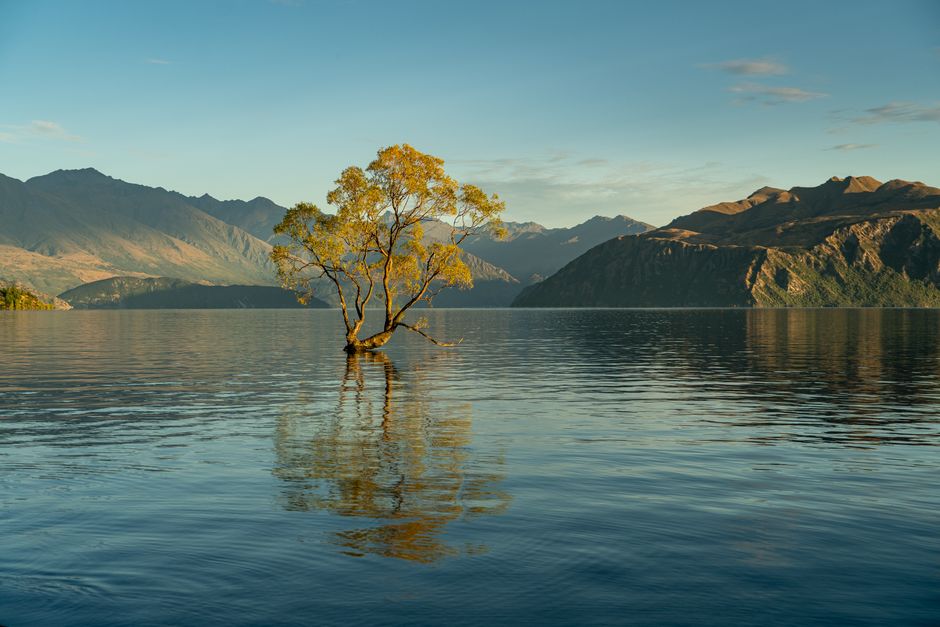
This might just be personal preference, but I think New Zealand rewards the kind of traveler who plans carefully and then lets the plan breathe. Leave gaps. An unscheduled afternoon at a South Island lake, with nothing to do but sit there, is often the moment you’ll remember longest.
What German Travelers Should Know Before Booking
New Zealand’s remoteness is its greatest asset and its main logistical challenge. The 24-hour travel time from Germany means this isn’t a trip you take lightly, and it shouldn’t be planned lightly either. A few final travel tips for New Zealand from a practical standpoint:
Power outlets use Type I plugs (the angled two-pin Australian style). Bring an adapter. Credit cards work almost everywhere, but some remote campgrounds and farm stays are cash-only. The New Zealand dollar fluctuates against the euro; as of recent months, €1 buys roughly NZD 1.85–1.90.
Cell coverage on the South Island is patchy outside towns. Vodafone NZ and Spark both sell prepaid SIM cards at the airport (around NZD 30–50 for a travel plan with data). Download offline maps before heading to the West Coast or Fiordland.
And one thing most guides won’t tell you: New Zealand’s biosecurity is strict. Declare everything at customs. Hiking boots with dirt on them, a forgotten apple in your bag, even a wooden souvenir from a previous trip. Fines start at NZD 400. They’re serious about it, and rightly so.
New Zealand sits at the end of the earth, and getting there takes commitment. But for a honeymoon, for a once-in-a-decade trip, for the kind of travel that changes how you see distance and landscape and quiet, it’s worth every hour in the air. The islands deliver different things. Both deliver completely.
Frequently Asked Questions
1. What are the best times to visit New Zealand for a Neuseeland Rundreise?
The best times to visit New Zealand are March–April and October–November, when weather, crowds, and pricing are more balanced. Summer is warmer and busier, while winter suits skiing and hot springs, especially on the South Island.
Shoulder months also work well for a honeymoon because the light is softer, the roads are less crowded, and key stops like Milford Sound and Abel Tasman feel calmer.
2. Neuseeland Nordinsel oder Südinsel – welche passt zu mir?
Neuseeland Nordinsel oder Südinsel depends on your pace and priorities: the North Island suits shorter drives, warmer weather, culture, and food, while the South Island suits dramatic scenery, longer distances, and a quieter feel. That makes the choice one of style, not quality.
If you want coastal warmth, Māori heritage, and easier logistics, choose the North Island; if you want fjords, glaciers, and remote lodges, choose the South Island.
3. What are the top attractions in New Zealand for German travelers?
The top attractions in New Zealand include Rotorua, Cathedral Cove, the Bay of Islands, Milford Sound, Queenstown, Franz Josef, Abel Tasman, and the Tongariro Alpine Crossing. These are the most distinctive stops for scenery, culture, and active travel.
For a balanced trip, pair North Island highlights like geothermal sites and wine with South Island icons like fjord cruises and glacier experiences.
4. What to know before visiting New Zealand about safety and driving?
What to know before visiting New Zealand starts with left-side driving, changing alpine weather, and the need to respect the landscape. New Zealand travel safety tips also include checking for river flooding, limited cell coverage in backcountry areas, and allowing more time than maps suggest.
German visitors also need an NZeTA and should process it at least 72 hours before departure. The South Island can be especially variable, so offline maps, an adapter, and sun protection are essential travel tips for New Zealand.
5. How to save money while traveling in New Zealand on a budget?
How to save money while traveling in New Zealand comes down to choosing shorter routes, using internal flights between islands, and mixing in supermarket meals or free freedom camping where allowed. The North Island is generally cheaper for accommodation, food, and fuel.
For New Zealand budget travel, booking early can also help, since some internal flights are available at lower fares if reserved in advance.
6. What are the best activities in New Zealand for a honeymoon?
The best activities in New Zealand for a honeymoon combine relaxation and standout experiences, such as Waiheke wine tasting, Rotorua hot pools, Milford Sound cruises, Queenstown dining, and a scenic day on the Coromandel or Abel Tasman. These options create variety without overpacking the itinerary.
For a romantic route, start with the South Island for drama and finish on the North Island for warmth and ease.
 |
Rahul Baloni |
Last updated at: October 30, 2026
 Powered by TypeHero