
At a Glance
Sri Lanka is small but packed; the order of stops matters more than how many you add.
A smooth 10-day route links the Cultural Triangle, hill country (scenic Kandy–Ella train), and the south coast (Galle to Tangalle).
For two weeks, add Yala (leopards) and Trincomalee/Pigeon Island snorkeling (May–Oct).
Germans need an online ETA (~48 hours), no visa fee, 30 days; best full-island months: Jan–Mar.
Costs vary mainly by hotels: about €1,200–€2,000 (budget) vs. €3,500–€6,000 (luxury), excluding flights.
Colombo’s Bandaranaike International Airport sits roughly 9,400 kilometers from Frankfurt, and the direct flight takes about 10 hours. That’s close enough to feel manageable, far enough to feel like a different world. If you’re building a Sri Lanka travel itinerary for Germans, the planning starts not with what to see (there’s too much) but with how to sequence it. The island is compact, about 65,600 square kilometers, smaller than Bavaria. But the density of things to do in Sri Lanka, from 2,200-meter peaks to coral reefs 15 minutes offshore, means the order of your stops matters more than the number.
Baloni Bespoke Travel builds these routes day by day from Esslingen am Neckar, near Stuttgart. Every Sri Lanka itinerary is planned by the founder personally, with hotels, guides, and transfers coordinated end to end. No catalog. No fixed packages.
What guests are saying
“My wife and I booked a trip to India through BBT. We visited Jaipur and Delhi, among other places. Everything went wonderfully, and our requests were met to our complete satisfaction. We got to know the country and its people and received a warm welcome everywhere we went. I even dared to drive in Delhi’s city traffic—or rather, I got to drive Mr. Baloni’s car ;)”
— Jan Szameitat · Google · ★ 5.0
“BBT helped us book a break in Cambodia. The whole process was efficient, professional and easy. Simple discussion on our needs were held and the rest was taken care of. Thank you.”
— Navin Nayak · Google · ★ 5.0
Best Places to Visit in Sri Lanka on a 10-Day Route
A well-paced Sri Lanka itinerary for 10 days covers four distinct zones without feeling rushed: the Cultural Triangle in the north-central plains, the hill country around Ella and Nuwara Eliya, the southern coast from Galle to Tangalle, and (if you time it right) a final stretch on the west or east coast for beach days.
The Cultural Triangle alone could fill a week. Sigiriya Rock Fortress, a 200-meter granite monolith with fifth-century frescoes, is the anchor. Dambulla Cave Temple, about 20 minutes by car, holds 153 Buddha statues across five caves. And Polonnaruwa, the medieval capital, is best explored by bicycle in the early morning before the heat builds.
From there, the train to hill country is the single best travel experience on the island. The Kandy-to-Ella railway, roughly 7 hours, crosses nine-arch bridges, passes through 44 tunnels, and climbs to over 1,800 meters. Book second class. First class has sealed windows.

The southern coast is where most travelers slow down. Galle Fort, a UNESCO site built by the Portuguese in 1588 and expanded by the Dutch, is walkable in a couple of hours. But the real draw is the stretch between Unawatuna and Tangalle: quiet bays, surf breaks, and boutique hotels tucked behind coconut palms.
If you’re considering a recommended itinerary for two weeks in Sri Lanka, add Yala National Park (Sri Lanka’s highest density of leopards per square kilometer) and the east coast town of Trincomalee, where Pigeon Island offers some of the island’s best snorkeling between May and October.
Sri Lanka Travel Tips for Germans: Timing, Visas, and Logistics
The best time to visit Sri Lanka for German tourists depends on which coast you’re targeting. The southwest monsoon runs from May through September, drenching the west and south coasts. The northeast monsoon hits from October through January. The sweet spot for a full-island route is January through March, when both coasts are relatively dry and hill country temperatures sit around 15–20°C.
German passport holders need an Electronic Travel Authorization (ETA) before arrival, processed online in about 48 hours. There’s no visa fee for German travelers. Entry permits allow 30 days.
Detail | What to Know |
|---|---|
Flight time (FRA–CMB) | ~10 hours direct |
Time difference | +3.5 hours (CET) or +4.5 hours (CEST) |
Currency | Sri Lankan Rupee (LKR) |
Visa | ETA required, no visa fee, 30-day stay |
Best full-island months | January–March |
Driving | Left-hand traffic; hire a driver |
One thing that catches German travelers off guard: distances on paper look short, but roads are slow. Colombo to Kandy is 115 kilometers and takes 3 to 4 hours by car. A private driver and vehicle, which Baloni Bespoke Travel arranges as part of every itinerary, transforms this from a frustration into a feature. You stop when something catches your eye. You eat where the driver knows the food is good.

Cultural Experiences in Sri Lanka Worth Prioritizing
Sri Lanka’s cultural layer runs deeper than most first-time visitors expect. The island has eight UNESCO World Heritage Sites, and four of them sit within a few hours of each other in the Cultural Triangle.
Start at the Temple of the Tooth in Kandy. The evening puja ceremony, held around 6:30 p.m., fills the inner sanctum with drumming, chanting, and the heavy scent of jasmine and lotus. It’s crowded. Go anyway. The atmosphere is impossible to replicate elsewhere.
In the hill country, a visit to a working tea factory is worth your time. Not the tourist-circuit ones, the smaller operations where you can watch the withering, rolling, and oxidation process up close and taste the difference between a low-grown and a high-grown Ceylon. If I’m being honest, I think the factory visit matters more than the plantation photo op most people chase.
For something quieter, the cave temples at Dambulla are best visited at opening (7:00 a.m.) before tour buses arrive. The murals inside date to the first century BCE, and the silence at that hour lets you actually look at them.

Sri Lanka Budget Travel for Germans: What to Expect
A Sri Lanka trip from Germany doesn’t have to break the bank, but the range is wide. Budget-conscious German travelers can manage a comfortable 10-day trip (excluding international flights) for roughly €1,200–€2,000 per person, staying in well-run guesthouses and using a shared driver. At the luxury end, boutique heritage hotels, private guides, and curated experiences push that to €3,500–€6,000 per person.
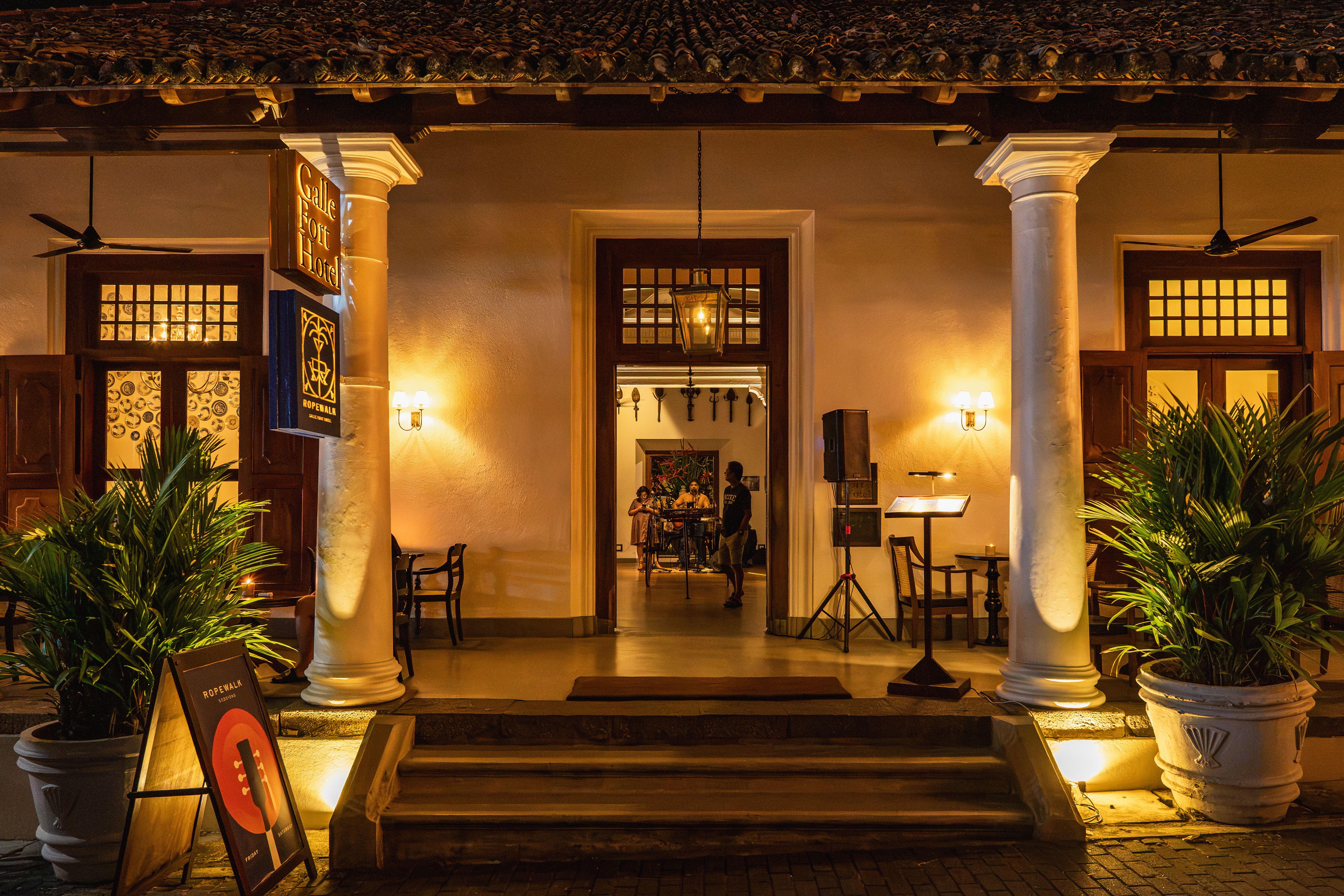
The biggest variable isn’t food or transport. It’s accommodation. A room at a heritage property inside Galle Fort runs €150–€350 per night. A comparable guesthouse two streets outside the walls costs €40–€80. Both give you the same fort, the same sunsets, the same rooftop views of the Indian Ocean.
Internal flights exist (Cinnamon Air operates seaplane and domestic routes) but aren’t necessary for most itineraries. The scenic train rides are half the experience, and a private car with driver costs roughly €40–€60 per day, fuel included.
Baloni Bespoke Travel handles the calibration between budget and experience. The founder selects properties personally, which means you’re not paying for a brand name when a smaller, better-positioned hotel exists.
How to Plan a Sri Lanka Trip from Germany with Baloni Bespoke Travel
Planning a Sri Lanka trip from Germany through Baloni Bespoke Travel’s Sri Lanka program starts with a conversation. The founder, Rahul Baloni, works from Esslingen am Neckar and plans every route personally. He’s visited Sri Lanka himself, and the on-the-ground partners, from drivers to hotel concierges, are relationships he maintains directly.
The process is straightforward:
You share your dates, pace, interests, and budget
A day-by-day itinerary is drafted with specific hotels, experiences, and transfers
Adjustments happen in real time until the route fits
Everything except your international flight is coordinated and confirmed
During the trip, WhatsApp support is available around the clock
This is how a Sri Lanka travel guide for Germans becomes something more than a list of sights. It becomes a route that accounts for your energy on day seven, the monsoon pattern that week, and the fact that you mentioned you’d rather have a long lunch than a packed afternoon.
For travelers exploring the broader Indian subcontinent region, Sri Lanka combines well with the Maldives (a 90-minute flight from Colombo) for a beach extension, or with a North India itinerary for couples wanting to pair temples and tea hills with Rajasthan’s palaces.

Must-See Attractions in Sri Lanka for Germans: A Quick Reference
Attraction | Region | Time Needed | Best Season |
|---|---|---|---|
Sigiriya Rock Fortress | Cultural Triangle | Half day | Jan–Mar |
Temple of the Tooth, Kandy | Hill Country | 2–3 hours | Year-round |
Nanu-Oya–Ella Train | Hill Country | 2–4 hours | Jan–Mar |
Yala National Park | South | Full day safari | Feb–Jul |
Galle Fort | Southern Coast | Half day–full day | Nov–Apr |
Mirissa (whale watching) | Southern Coast | Half day | Nov–Apr |
Polonnaruwa ruins | Cultural Triangle | Half day | Jan–Mar |
Adam’s Peak (Sri Pada) | Hill Country | Overnight hike | Dec–May |
Adam’s Peak deserves a note. The 5,500-step climb starts around 2:00 a.m. to reach the 2,243-meter summit by sunrise. It’s a pilgrimage site for four religions simultaneously, and during peak season (December through May) the stone staircase is lit with small lights the entire way up. It’s a bit of a trek. Your mileage may vary on whether the sunrise justifies the sleep deprivation, but most people who do it say it does.

A Sri Lanka Travel Itinerary for First-Time Visitors: The Honest Version
Skip Colombo. Or give it one night to recover from the flight and eat a proper rice and curry at a local spot your driver recommends. The city has energy, but it’s not why you flew 10 hours.
Spend your time in the Cultural Triangle (3 nights), hill country (2–3 nights), and the south coast (3–4 nights). That’s a Sri Lanka itinerary for 10 days that covers the must-see attractions in Sri Lanka for Germans without the frantic pace that ruins half the trips I hear about.
And one more thing. Tipping culture in Sri Lanka is straightforward: 10% at restaurants if service isn’t included, and roughly 1,000–2,000 LKR per day for your driver. Your Baloni Bespoke Travel coordinator provides a detailed tipping guide before departure so you’re not guessing.
Sri Lanka is 65,600 square kilometers of ancient ruins, 1,330 kilometers of coastline, tea-covered highlands above 1,800 meters, and leopard-dense national parks. A well-built itinerary from Germany covers the ground without wasting a day. Baloni Bespoke Travel plans that itinerary around your rhythm, your interests, and your dates, with every hotel, driver, and experience confirmed before you board the plane.
Frequently Asked Questions
How to plan a Sri Lanka trip from Germany for a Sri Lanka travel itinerary for Germans?
A strong Sri Lanka travel itinerary for Germans starts with sequencing, not sightseeing lists. Plan the Cultural Triangle first, then hill country, then the south coast, and let a private driver handle the slow roads and transfers.
What is the best time to visit Sri Lanka for German tourists?
The best time to visit Sri Lanka for German tourists is January through March, when both coasts are relatively dry and hill country temperatures sit around 15–20°C. The southwest monsoon affects the west and south from May to September, while the northeast monsoon runs from October to January.
What are the best places to visit in Sri Lanka on a Sri Lanka itinerary for 10 days?
The best places to visit in Sri Lanka on a Sri Lanka itinerary for 10 days are the Cultural Triangle, hill country, and the southern coast. This route can include Sigiriya, Dambulla, Polonnaruwa, the Kandy-to-Ella train, Galle Fort, and the beaches between Unawatuna and Tangalle.
Which cultural experiences in Sri Lanka should Germans prioritize?
The most important cultural experiences in Sri Lanka are the Temple of the Tooth in Kandy, a working tea factory in hill country, and the cave temples at Dambulla. These stops show the island’s religious, agricultural, and artistic depth without adding unnecessary travel time.
What should Germans know about Sri Lanka budget travel and transport?
Sri Lanka budget travel for Germans is possible at roughly €1,200–€2,000 per person for 10 days, excluding international flights. A private car with driver costs about €40–€60 per day, and roads are slow enough that hiring a driver is the practical choice.
What are the must-see attractions in Sri Lanka for Germans on a first trip?
The must-see attractions in Sri Lanka for Germans on a first trip are Sigiriya Rock Fortress, Dambulla Cave Temple, Polonnaruwa, the Temple of the Tooth, Galle Fort, and Yala National Park. If you have extra time, Adam’s Peak and Trincomalee add depth to the route.
 |
Rahul Baloni |
Last updated at: October 26, 2026
 Powered by TypeHero